
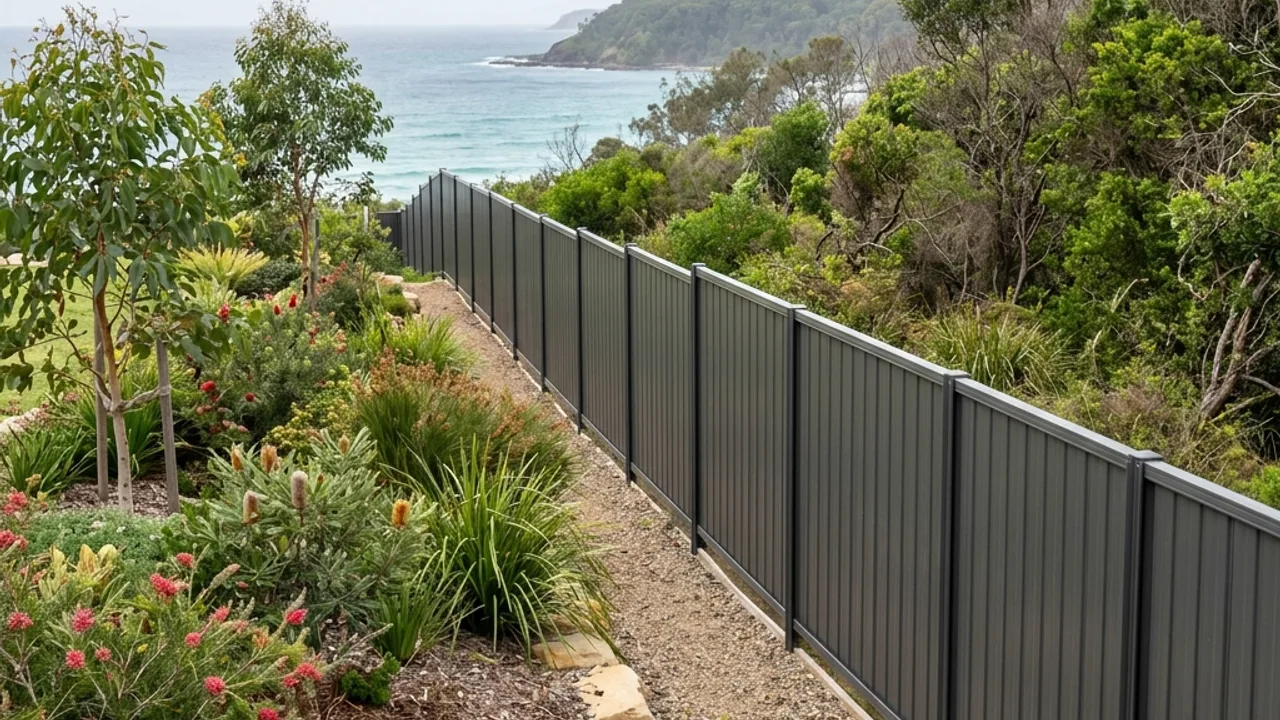
Long Woodland Grey Colorbond boundary fence on a coastal Queensland property

Colorbond Fencing for Noosa and the Sunshine Coast

A factory-finished steel panel fence that handles salt air and coastal wind without a repainting cycle, matched to the exposure your specific block actually faces.

What the job covers

Who this suits and what to expect

Colorbond suits almost any Noosa or Sunshine Coast boundary where low maintenance matters more than a timber look, and it is the material most competitors lead with for exactly that reason. At the first contact, a fencing contractor in our network measures the run, checks the boundary against the existing fence line, and talks through colour and panel profile before pricing anything. What changes the quote is not just the length of the run but how exposed the specific block is - a beachfront run at Sunshine Beach and a sheltered street in Cooroy do not carry the same wind and footing spec, even in the same colour.

Colorbond steel fence panel installation detail

What a Colorbond fencing job includes

Woodland Grey panels

The most common AU boundary colour, a mid-grey that suits most streetscapes without standing out.

Monument panels

A near-black finish popular on newer coastal builds for a sharper, more contemporary look.

Basalt panels

A lighter grey with a slight blue undertone, a common choice on brighter coastal facades.

Post and rail installation

Galvanised steel posts and rails set to the panel manufacturer's wind-classification spec for the site.

Removal of the old fence

Demolition and disposal of the existing fence, priced as its own line rather than folded into the total.

What Noosa Fencing builds for real coastal wind, not a flat-ground average

A Colorbond panel is a solid, unbroken surface, which is exactly why wind rating matters more with this material than with an open slat or ringlock fence. Manufacturer wind-classification tables set post spacing, post size and footing depth against the actual site exposure, and a block on the open beachfront at Sunshine Beach or Marcoola needs a genuinely different spec to a sheltered street at Cooroy or Doonan, even though both are within the same broad service area.

Getting that classification right at the measure, rather than defaulting to a standard suburban spec, is the difference between a fence that stands through a full storm season on an exposed block and one that does not. It also affects the quote - a wind-rated footing on an exposed coastal run genuinely costs more in concrete and post depth than the same length of fence on a sheltered inland street, and that should be visible in the written quote rather than absorbed silently either way.

Colour and panel choice matter for appearance, but they do not change durability the way wind rating does. Woodland Grey, Monument and Basalt all perform the same structurally - the decision between them comes down to how the fence sits against the house and streetscape, which is worth walking through at the measure rather than picking sight unseen from a swatch.

How a Colorbond fencing job runs

1

Enquire

Send the run length, rough location and colour preference through the form.
2

Measure

A site visit confirms the boundary, checks access and assesses wind exposure for the specific block.

3

Quote

A written, fixed-price quote covers colour, panel profile, footing spec and old-fence removal as separate lines.

4

Install

Posts are set to the confirmed wind classification and panels are fitted, with hardware and gates itemised separately.

Why use our network for Colorbond fencing

Wind classification assessed, not assumed

Post spacing and footing depth are set for your specific site's exposure, not a flat suburban default.

QBCC-licensed installers for the job value

Paid work at $3,300 or more including labour and materials is carried out by a QBCC-licensed contractor in our network, as required on non-agricultural QLD land.

Old fence removal priced honestly

Demolition and disposal appear as their own quote line, so the total does not move once the first panel comes down.

Common questions before booking

Will Colorbond hold up right on the beachfront?

Factory-finished Colorbond handles salt exposure well, but coastal-grade fixings and the right wind classification matter as much as the panel itself on an exposed block - both get assessed at the measure.

Does my job need a QBCC-licensed contractor?

In Queensland, paid fencing work of $3,300 or more including labour and materials on non-agricultural residential land needs a QBCC-licensed contractor. Most full Colorbond boundary jobs clear that figure.

Can I mix Colorbond with a timber front fence?

Yes - a Colorbond rear and side boundary paired with a timber or aluminium slat front fence is common where street appeal and low-maintenance boundary work both matter.

Colorbond fencing questions

Questions Noosa and Sunshine Coast homeowners bring to this job, answered plainly.

How much is Colorbond fencing per metre?
Colorbond is usually one of the more common mid-range options for boundary fencing. Sunshine Coast pricing guides and contractor estimates generally put it in a per-metre range rather than a single fixed price, and extras like sloping ground, gates, or old-fence removal can change the total. Quotes are usually needed for an accurate figure.
What is the best fence for coastal areas like Noosa?
Coastal areas usually need materials that can handle salt air and corrosion better than untreated timber or low-grade metal. Many people choose aluminium, Colorbond, or properly treated timber depending on budget and appearance. Maintenance needs are often higher closer to the coast than inland.
Do fencing contractors service Tewantin and Noosaville?
Yes, many Sunshine Coast fencing businesses service Noosa-area suburbs including Tewantin and Noosaville. Availability depends on the contractor, job size, and whether the work is standard boundary fencing, pool fencing, or custom gates. It is normal to ask for a site visit before getting a firm quote.
How high can a fence be without approval in Queensland?
On the Sunshine Coast, fences up to 2 metres high above natural ground level can generally be built without building approval. If the fence is higher than that, attached to a retaining wall, or part of pool fencing, approval is usually required. Council and private certifier rules can also apply depending on the site.
Can I install a fence myself?
DIY fencing is possible for some simple jobs, but alignment, post depth, drainage, and boundary checks can make it harder than it looks. If the fence is on a boundary, near a retaining wall, or subject to approval rules, mistakes can create neighbour or compliance problems. Many people DIY only smaller internal or low-risk fences.

Colorbond Fencing across Noosa

Pick your suburb for the local ground, soil and access notes, or send the form and we will come back with a written quote for colorbond fencing.

Colorbond Fencing in Noosa Heads Headland lots run shallow sandy soil over sandstone and take the full force of onshore south-easterlies. Colorbond Fencing in Noosaville Riverfront blocks sit on low estuarine sand with acid-sulfate potential, so footings need the right protection. Colorbond Fencing in Tewantin Alluvial river terraces can sit high on groundwater, so post holes here often need extra drainage allowance. Colorbond Fencing in Sunshine Beach Elevated dune-sand blocks cop salt spray and blown sand, which is why post treatment matters more here than inland. Colorbond Fencing in Peregian Beach Dune and wallum sand runs soft underfoot, so footing depth gets more attention than on firmer hinterland ground. Colorbond Fencing in Coolum Beach Beachfront sand takes the brunt of onshore wind, while blocks a street or two back sit noticeably calmer. Colorbond Fencing in Marcoola Wind data from the airport next door confirms it: Marcoola gets some of the coast's strongest gust loading. Colorbond Fencing in Mount Coolum Ground swings from rocky mountain residual to soft coastal sand within a few streets here. Colorbond Fencing in Doonan Duplex clay subsoil under the sandy topsoil erodes fast once disturbed, so post-hole spoil needs careful handling. Colorbond Fencing in Cooroy Red hinterland loam holds a post well once it's set, but the stony rises near the mountain slow the dig down. Colorbond Fencing in Pomona Mount Cooroora channels wind through the valley in gusts, which is worth allowing for on an exposed boundary run. Colorbond Fencing in Eumundi Creek-side blocks carry deeper alluvium than the surrounding ridges, so footing depth is rarely one-size-fits-all. Colorbond Fencing in Cooran Valley alluvium is easy digging most of the year, but the slopes toward the range hold stony duplex soil instead. Colorbond Fencing in Boreen Point Lake Cootharaba builds real fetch across open water, so lakefront runs see more sustained wind. Colorbond Fencing in Castaways Beach Deep dune sand drains fast but holds little, so a taller boundary fence needs a deeper set than the beach suggests. Colorbond Fencing in Kin Kin Kin Kin's phyllite clay goes soft and heavy after rain, which changes how a strainer post needs to be set. Colorbond Fencing in Yandina River-flat alluvium floods easily, so drainage under a boundary fence matters as much as the post spacing. Colorbond Fencing in Verrierdale Cleared acreage blocks catch noticeably more wind than the wooded hinterland lots just down the road.

See all locations ->

Related fencing services

Talk to a fencing specialist

Ready to price a Colorbond fence?

Send the run length and rough location and we will help you work out the right colour, panel and footing spec.