
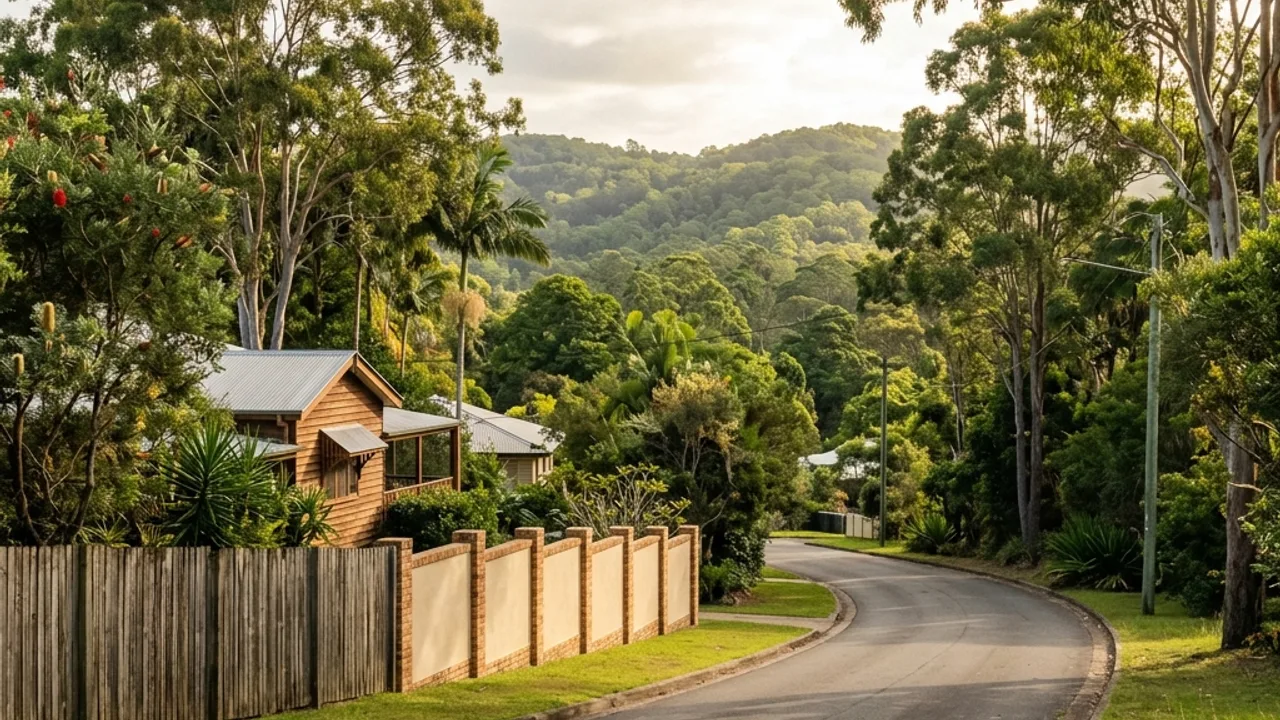
Doonan postcode 4562, Noosa
Fencing in Doonan
Acreage hinterland country between Tewantin and Eumundi, home to Noosa Valley Golf Club and the Eumundi-Noosa Road produce and gallery strip.
Doonan is hinterland acreage country, and fencing here is a genuinely different job to the suburban boundary work closer to the coast. Here is what an acreage or rural-residential fence in Doonan actually involves.
Noosa Fencing on acreage fencing and the rural exemption around Doonan
Doonan's rolling country runs on sandy or loamy surface soil over acidic clay or duplex subsoil, with alluvium in the drainage lines. On acreage boundaries, ringlock or strained-wire fencing on galvanised star pickets is the standard, cost-effective way to enclose a paddock or property line, and unlike a suburban boundary fence it can be genuinely exempt from QBCC licensing - a fence with no concrete footing, made of posts, pickets or stakes joined by strands of wire, is exempt at any value, and a fence on land that is genuinely agricultural or pastoral is exempt regardless of value too. That is worth knowing before assuming every job here needs the same licence a Colorbond suburban fence would.
That said, not every Doonan fence is exempt. A residential boundary fence around a house yard on a rural-residential block - as opposed to a paddock fence on genuinely agricultural land - is treated the same as a suburban fence for licensing purposes, and once the value reaches $3,300 including labour and materials, a QBCC-licensed contractor is required. Knowing which category a given job falls into up front avoids assuming an exemption that does not actually apply.
The duplex clay subsoil under Doonan's sandy topsoil is erodible once disturbed, so post-hole spoil and site access get handled with more care than on firmer hinterland ground further inland - it is one of the reasons a genuine site visit matters more here than a phone quote would.
Wind exposure is generally sheltered given Doonan's inland position, but ridge-top acreage blocks can be considerably more exposed than valley properties a short distance away, which affects post spacing on longer rural runs.
Why Doonan property owners get us involved early
Rural exemption explained accurately
Wire rural fencing and fencing on genuinely agricultural or pastoral land are exempt from QBCC licensing at any value - we explain which parts of your job qualify rather than assuming a blanket answer either way.
House-yard fencing separated from paddock fencing
A residential boundary around the house is licensed differently to a rural paddock fence - we scope the job correctly from the start.
Erodible clay subsoil handled properly
Doonan's duplex clay under the topsoil needs careful post-hole and spoil handling, especially on sloped ground - we plan for that rather than treating every hole the same.
We focus on fencing across Noosa and the Sunshine Coast hinterland, with QBCC-licensed operators brought in wherever the job value or the fence type makes that a legal requirement.
About Doonan
Doonan is acreage hinterland country between Tewantin and Eumundi, home to Noosa Valley Golf Club and the Eumundi-Noosa Road shopping strip.
Noosa Pengari Steiner School and the well-known Doonan garden venue give the suburb a landmark beyond its rural feel, and the property mix runs from smaller rural-residential lifestyle blocks to larger genuine acreage holdings. Fence work here spans both the house-yard boundary around a homestead and full paddock enclosure on the larger properties, which is exactly why the QBCC licensing distinction between the two matters.
What actually shapes a fence line in Doonan
The rolling hinterland topography and duplex clay-over-sand soil are the first factor - erosion-prone once disturbed, which changes how carefully a post hole and its spoil get managed compared with firmer ground. The second is the genuine split between rural-residential lifestyle blocks and larger agricultural holdings within the same locality, which is the practical reason the QBCC's wire-fencing and agricultural-land exemptions come up so often here and so rarely on a suburban Noosa Heads job.
Fencing services available in Doonan
Pick the material or job type that matches what you are planning for a closer look at scope, decision points and compliance.
Get help with your Doonan project
Planning a fence on your Doonan property?
Tell us whether it is a house-yard boundary or a paddock line, and roughly how the block is used, and we will help you work out what applies.
Tell us what is happening in Doonan and we will help you take the next step.
Your details help us understand what you need and respond clearly.
Adjacent suburbs we also cover
Doonan borders Tewantin and Noosaville toward the coast, and Weyba Downs and Verrierdale further into the hinterland.
Also adjoining Doonan: Weyba Downs.
More Noosa suburbs we cover
Fencing questions from Doonan
The questions that come up most on Doonan enquiries, answered as they apply in Queensland.