
Kin Kin postcode 4571, Noosa
Fencing in Kin Kin
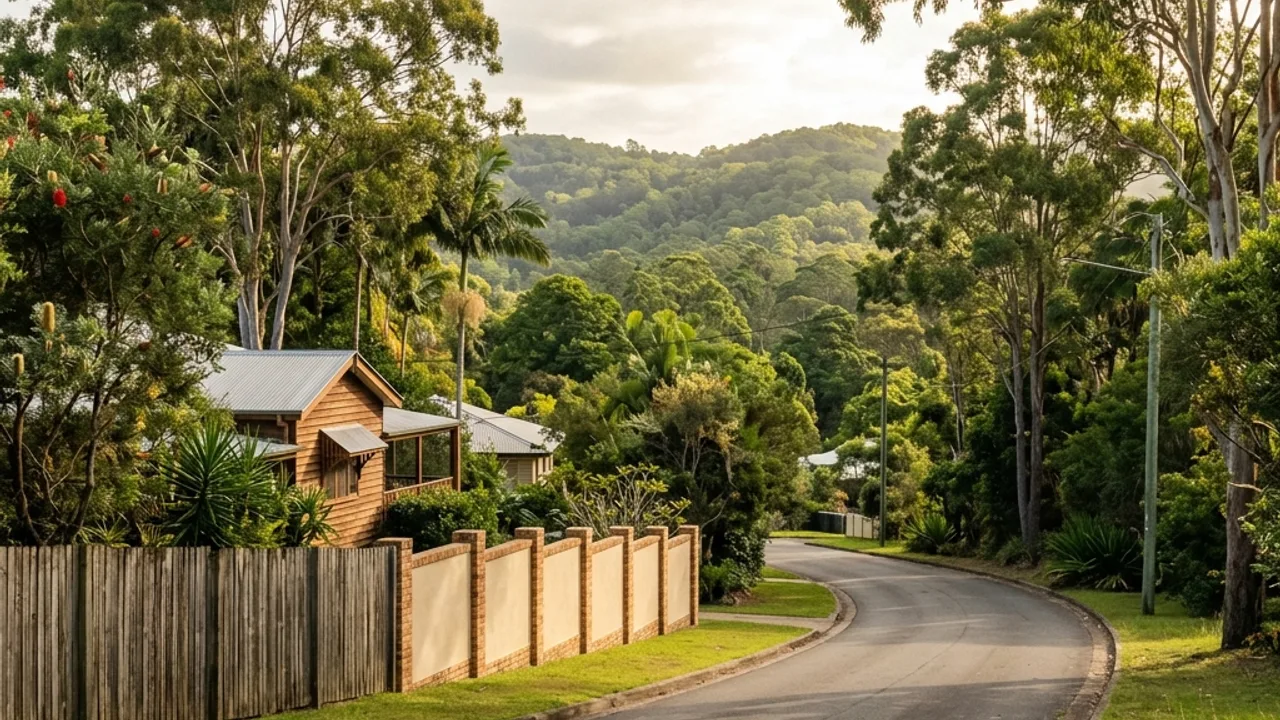
A tiny hinterland farming village in the hills above Cooran, known for its heavy clay country and the Kin Kin Country Life Hotel.
Kin Kin is genuine farming country in the hills above Cooran, and the ground here is unlike almost anywhere else in this catchment. Here is what that means for a fence.
Noosa Fencing on heavy clay ground and the rural exemption at Kin Kin
Kin Kin sits on the Kin Kin Beds - phyllite and mudstone-derived clay that is heavy, erosion-prone on slopes, and goes genuinely soft and difficult when saturated after rain, with red soil also appearing locally and phyllite-dominated alluvium along the watercourses. That is a materially different digging job to the sandy hinterland loam around Cooroy or Pomona, and it changes how a strainer post - the heavy anchored end post that carries the tension of a wire fence - actually gets set. A strainer post in Kin Kin clay needs a properly compacted footing to hold its tension over time; done poorly, the clay's tendency to soften after rain will work a strainer loose faster than it would in firmer ground.
Given Kin Kin's genuinely rural character, the QBCC's exemptions apply to real jobs here more than almost anywhere else in the service area: a fence with no concrete footing, made of posts, pickets or stakes joined by strands of wire, is exempt from licensing at any value, and fencing on agricultural or pastoral land is exempt regardless of value too. Ringlock and star-picket construction, which is exactly this kind of wire fencing, is the standard for paddock boundaries here.
A house-yard fence around a Kin Kin homestead is a different category, though - that is treated the same as any other residential fence for licensing purposes, and once the job reaches $3,300 including labour and materials, a QBCC-licensed contractor is required regardless of how rural the surrounding property is.
The valley setting keeps most of Kin Kin sheltered day to day, but steep cleared ridges in the hills around the village can be genuinely gusty, which is worth factoring into post spacing on a long paddock run that climbs a slope.
Why Kin Kin property owners get us involved early
Strainer posts set properly for heavy clay
Kin Kin's phyllite clay goes soft after rain and can work a poorly-set strainer post loose - we compact the footing correctly so the fence line holds its tension.
Genuine rural exemptions applied correctly
Wire fencing and fencing on agricultural land are exempt from QBCC licensing here more often than in most other parts of the service area - we explain exactly what applies to your property.
House yard scoped separately from the paddock
A homestead boundary needs a licensed contractor once it reaches the value threshold, even on a genuinely rural property - we scope that correctly from the start.
We focus on fencing across Noosa and the Sunshine Coast hinterland, with QBCC-licensed operators brought in wherever the job value or the fence type makes that a legal requirement.
About Kin Kin
Kin Kin is a tiny hinterland farming village in the hills above Cooran, known for its heavy clay country and the Kin Kin Country Life Hotel.
Kin Kin State School and the Kin Kin Memorial School of Arts Hall anchor the small village along Main Street, with the surrounding hills given over almost entirely to farming and grazing country. This is genuine rural Queensland, and fencing work here is dominated by paddock boundaries and stock fencing rather than the suburban boundary replacements that make up most of the work closer to the coast.
What actually shapes a fence line at Kin Kin
The Kin Kin Beds clay is the defining feature - heavy, phyllite-derived ground that is erosion-prone on slopes and goes soft when wet, a genuinely different post-setting job to the sandier hinterland loam even a short drive away toward Cooran. The second factor is how genuinely rural the property mix is here compared with the rest of the service area, which is exactly why the QBCC's wire-fencing and agricultural-land exemptions come up as a real, frequent question in Kin Kin rather than an occasional edge case.
Fencing services available in Kin Kin
Pick the material or job type that matches what you are planning for a closer look at scope, decision points and compliance.
Get help with your Kin Kin project
Planning fencing on your Kin Kin property?
Tell us whether it is a paddock line or a house-yard boundary, and we will help you work out what applies and how the clay affects the job.
Tell us what is happening in Kin Kin and we will help you take the next step.
Your details help us understand what you need and respond clearly.
Adjacent suburbs we also cover
Kin Kin borders Cooran to the south, Pinbarren and Cootharaba nearby, and Wolvi further into the hinterland.
Also adjoining Kin Kin: Pinbarren, Cootharaba, Wolvi.
More Noosa suburbs we cover
Fencing questions from Kin Kin
The questions that come up most on Kin Kin enquiries, answered as they apply in Queensland.